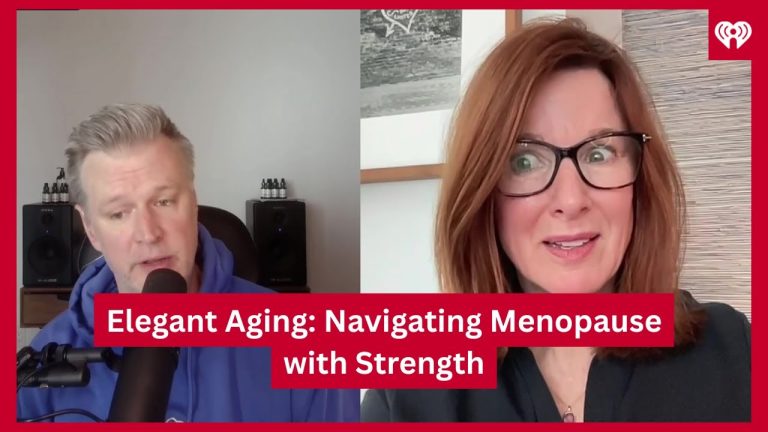
Perimenopause Symptoms: The Truth About Your Body
Sourced from multiple conversations: Shane Hewitt & the Nightshift
Menopause doesn’t announce itself. What really happens when your body rewrites the rules, and how to navigate the transition with wisdom and support.
📌 In This Article
- What perimenopause actually feels like, and why it sneaks up on you
- Medical insights on symptoms, treatment options, and healthcare gaps
- How nutrition and lifestyle changes support your changing body
- Practical ways partners can show up and help
- Why this transition can deepen creativity and authenticity
- Where to find reliable menopause resources in Canada
You’re standing at your bathroom sink watching your hair circle the drain. Again. You walked into the kitchen three times yesterday and forgot why. Perimenopause symptoms like these are exhausting, and you still can’t sleep. Your partner asks if you’re okay and you want to scream, but you’re not even sure why.
Here’s what nobody tells you about perimenopause symptoms: they don’t announce themselves. There’s no starting gun, no clear moment when everything shifts. Dr. Iliana Lega, an endocrinologist at Women’s College Hospital, puts it plainly. “Many of the symptoms are insidious. They don’t happen overnight. Women are often blindsided by these changes.”
The symptoms show up as strangers. Brain fog that makes you question your competence at work. Mood swings that feel nothing like your normal emotional range. Sleep disruptions that compound into everything else falling apart. And because these changes creep in slowly over months or even years, you might attribute them to stress, aging, or just life getting harder.
But here’s the thing: this is happening during what should be your peak years. You’re 45, maybe 50. You’ve built a career. You might have teenagers or aging parents or both. Your responsibilities have never been greater. “Women who are in their 40s and 50s are really at the peak of their lives,” Dr. Lega says. “If they’re not sleeping anymore, if they’re waking up at night with hot flashes, if they’re not coping from a mood point of view, there’s so many pieces in their lives that are going to fall apart.”
Perimenopause Symptoms Aren’t a Sentence to Decline
Helen Valleau remembers the moment she knew something had shifted. She was standing over her kitchen sink, watching water circle the drain, and thought: “Is this as good as life gets?” She was emotionally plummeting and didn’t understand why.
Helen went on bioidentical hormone therapy, changed her diet completely, learned to regulate her nervous system through techniques like HeartMath. Her thyroid went wonky and her hair started falling out. She needed medication. Her personality shifted in ways that surprised her husband. She cried more easily, became less willing to tolerate things she’d previously accepted.
But here’s where the story turns. Helen describes perimenopause and menopause as “a really meaningful transition into a new stage of life.” Not decline. Not loss. Transition. “It’s a season that isn’t about declining, isn’t about fixing what is broken, isn’t about fighting,” she explains. “It’s about learning to really listen more deeply and tuning into our bodies.”
The elegance, as Helen calls it, comes from knowing yourself so deeply that you can respond to everything life throws at you from groundedness rather than reaction. After menopause, she says, “I am now completely free to create my body and attune to my body the way I want to. And I’m also free to create in my life in a whole different way.”
Your body needs different things now. Alyssa B, a holistic nutritionist, is clear about this. The recipes that worked for you at 30 don’t work at 45. Your body breaks down faster. You need more fiber, more protein, more plants, more antioxidants.
“As we get older, it’s very, very important to add in more vegetables and add in more protein,” Alyssa explains. “Protein is essential. Protein is everything in our body from our skeletons and our muscles to our hair and our joints and the cartilage.”
When your hormones are fluctuating wildly, keeping your blood sugar consistent becomes critical. This means balanced meals at consistent times. High fiber foods. Lean proteins. Less sugar, less alcohol, fewer empty carbohydrates. The body changes aren’t negotiable. But how you respond to them is.
Jordan Smith is 40 years old and runs a Substack called “WTF is Menopause.” He watched his mother go through perimenopause when he was 16. Her last menstrual cycle lasted 128 days. He admits he was, in his words, “an absolute brat” during that time.
Now he’s helping men understand how to show up. “There’s a big opportunity to just even go to the doctor’s visit,” Jordan says. “This is a place that can determine the treatment and the quality of life for your loved one for the next five, seven years.”
Before the appointment, ask: How is it best for me to show up for you? Do you want me to take notes? Do you just want me to be there quietly? The important thing is that you’ve asked. You’ve communicated. You’re showing you’re ready to do whatever is needed.
Sleep becomes sacred. Night sweats and hot flashes can drench sheets. Keep the room cool. Have fresh sheets ready. Get up and change them without making it about you. “Some of these things you cannot take personally,” Jordan explains. “These are hormonal changes that are happening that you do not have control over.”
The other critical piece: this is not something to fix. You cannot fix perimenopause. You can educate yourself. You can show up. You can communicate. But you cannot fix what is a natural physiological transition.
Getting Help for Perimenopause Symptoms in Canada
The healthcare system is failing women here. Dr. Lega is blunt about this. “For many years, we have not been doing a good job providing menopause care. It’s not uncommon that a woman will go to their doctor saying I have these symptoms, is it menopause? And then the provider is saying either I don’t know or there’s no role for hormone therapy.”
In Ontario, nothing is covered for a 50-year-old woman unless they’re on disability or have private insurance. And even when women seek help, they’re often dismissed or misdiagnosed. So women have to advocate. Hard. They need to inform themselves about symptoms and bring that information to their healthcare provider. Resources exist: the Society of Obstetrics and Gynecology Canada, the Menopause Society, evidence-based voices like Dr. Jen Gunter on social media.
This is not a disease. This is not a failure. This is biology.
But the symptoms can be brutal. And there are treatments. You don’t have to white-knuckle your way through seven years of hot flashes. Most symptoms do get better on their own, but that can take time. If symptoms are interfering with your life, with your work, with your relationships, seeking treatment isn’t weakness. It’s wisdom.
Helen talks about femininity deepening after menopause, not diminishing. About accessing creativity and authenticity in ways that weren’t possible before. “The feminine energy is the nurturing energy. It is the creative energy,” she says. “And I think when we move through menopause, we tap into a whole other level of creativity, knowing ourselves, and an unwillingness to put up with the BS.”
The 18-year-old on Reddit asking how to help his mother through menopause is miles ahead of most 50-year-old men. The woman who learns to regulate her nervous system and protect her sleep is building resilience that extends far beyond hot flashes. The partner who shows up at the doctor’s appointment is changing the trajectory of someone’s next decade.
We live half our lives after menopause. That’s 40 years, 50 years, of life after this transition. What happens during these middle years matters. Not just for getting through it, but for everything that comes after.
If perimenopause symptoms like these sound familiar, you’re not alone. Listen to the full conversations on the Shane Hewitt & the Nightshift podcast, or subscribe to join the community for more honest talk on what nobody else says out loud.